
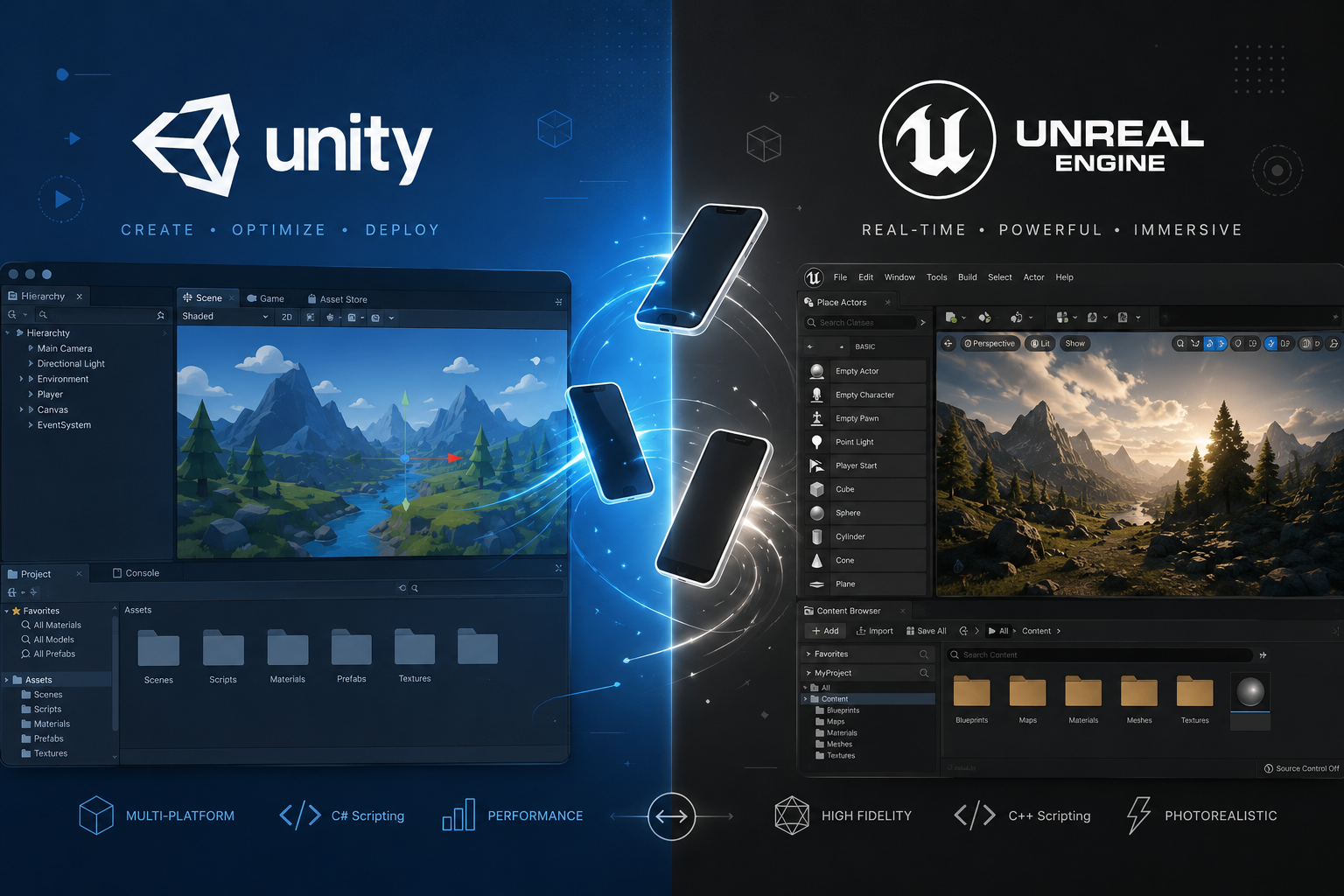
Unity vs Unreal Engine for Mobile Games: Which One Should You Choose in 2026?
If you're planning to build a mobile game, one of the first decisions you'll make — and one that's genuinely hard to reverse later — is which engine to build it on. Unity and Unreal Engine both dominate the mobile space, but they're built with different priorities in mind, and picking the wrong one can cost you months of rework.
Unity: The Mobile-First Powerhouse
Unity has been the default choice for mobile game development for over a decade, and for good reason.
Strengths:
- Lightweight builds that run smoothly on lower-end and mid-range Android devices, which still make up a huge share of the global mobile market
- C# scripting, which has a gentler learning curve than Unreal's Blueprint/C++ combination
- A massive asset store and plugin ecosystem that speeds up development significantly
- Strong 2D tooling out of the box, which matters a lot since a large percentage of successful mobile games are 2D or 2.5D
- Smaller install sizes, which directly affects download conversion rates on app stores
Trade-offs:
- Visual fidelity out of the box is generally less impressive than Unreal without significant custom shader work
- Can require more manual optimization work for complex 3D projects
Unreal Engine: Built for Visual Fidelity
Unreal Engine's strength is raw visual power, and its mobile support has improved considerably in recent versions.
Strengths:
- Industry-leading rendering quality, which matters for premium mobile titles competing on visuals
- Blueprint visual scripting lets designers prototype gameplay without writing code
- Increasingly capable of delivering console-quality visuals on flagship mobile hardware
Trade-offs:
- Heavier builds and higher device requirements, which can shrink your addressable audience on lower-end devices
- Steeper learning curve for teams not already familiar with C++
- Generally considered less mobile-optimized than Unity by default — most of its tooling and defaults are built with PC/console in mind first
Cost Comparison
Both engines are free to start. Unity uses a subscription/seat-based model at scale, while Unreal takes a royalty on revenue past a certain threshold. For most early-stage mobile projects, the practical cost difference comes down to development time and team expertise more than licensing fees — a project built by a team fluent in the "wrong" engine for their skillset will always cost more than the license itself.
Which Should You Choose?
- Choose Unity if: you're building a 2D, casual, hyper-casual, or mid-core mobile game, need to support a wide range of Android devices, or want faster iteration with a smaller, more mobile-native workflow.
- Choose Unreal if: you're building a premium, visually ambitious 3D mobile title primarily targeting flagship devices, and visual quality is a core part of your game's value proposition.
For the vast majority of mobile game studios — especially indie and mid-sized teams — Unity remains the more practical choice due to its lighter footprint, faster build times, and mobile-first ecosystem.
Working with a Studio That Knows Both
Choosing between Unity and Unreal isn't just a technical decision — it depends on your target audience, device reach, timeline, and budget. At Riftwood Studio, we build mobile games in both engines and help clients pick the right one before writing a single line of code, so you're not locked into a costly engine switch six months into development.
Need a second opinion on your project's tech stack? Get in touch with Riftwood Studio and we'll help you scope it out.
Looking for free tools to plan out your next project? Check out OmnifyTools for handy utilities that can support your workflow.